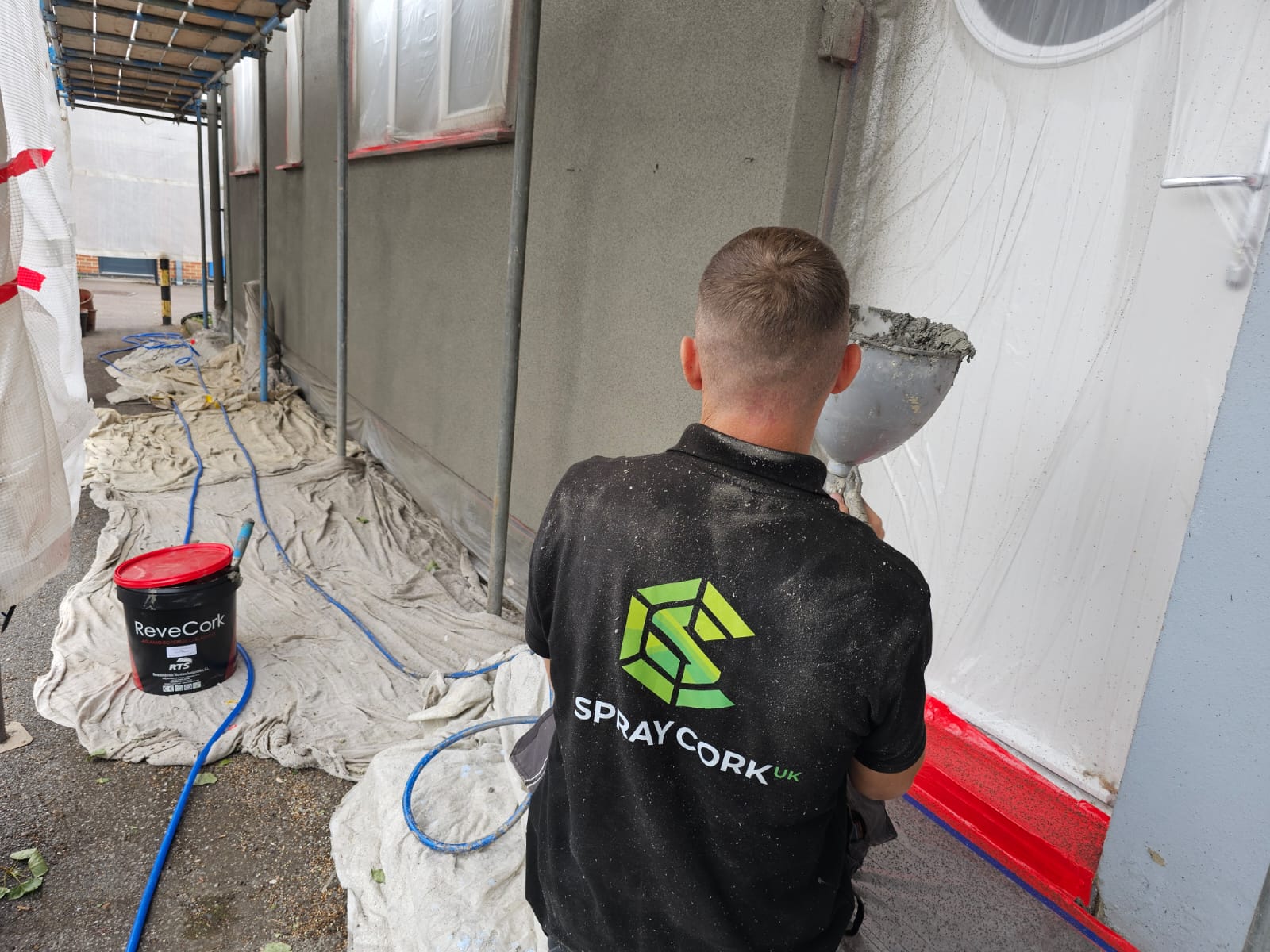
This guide explains the key differences between spray cork and exterior paint, including durability, maintenance, cost over time and performance in UK weather conditions. If you are new to spray cork, you may wish to begin with The Complete Guide to Spray Cork Insulation in the UK.
Exterior masonry paint is primarily designed to improve the appearance of a building. It provides colour coverage and a level of weather resistance, helping protect surfaces from light moisture exposure and UV damage.
Paint systems are widely used because they are relatively inexpensive and quick to apply. However, they are typically cosmetic solutions rather than long-term protective coatings.
Over time, painted surfaces may experience:
Spray cork is a specialist cork-based coating made from natural cork granules combined with advanced binders. Unlike paint, it is designed as a protective and performance coating rather than purely decorative finish.
Once applied, spray cork forms a flexible, breathable outer layer that helps protect walls from moisture, temperature fluctuation and minor building movement.
You can learn more about overall performance and value in Is Spray Cork Worth It? A UK Cost and Performance Guide.
While both options improve the appearance of exterior walls, their performance and long-term benefits differ significantly. The comparison below highlights the main practical differences homeowners should consider.
| Feature | Exterior Paint | Spray Cork |
|---|---|---|
| Primary purpose | Decorative finish designed to refresh appearance | Protective coating designed for durability and performance |
| Flexibility | Rigid surface that may crack over time | Flexible coating that moves with the building |
| Breathability | Limited vapour permeability | Highly breathable while repelling rainwater |
| Weather protection | Basic surface protection | Enhanced resistance to driving rain and exposure |
| Maintenance | Requires repainting every few years | Low maintenance with long service intervals |
| Lifespan | Typically several years depending on exposure | Designed for decades when installed correctly |
| Surface finish | Smooth painted finish | Subtle textured finish that helps disguise imperfections |
| Best suited for | Short-term aesthetic updates | Long-term exterior protection and performance upgrades |
The UK climate places significant stress on exterior coatings. Rain, frost cycles and temperature changes can cause rigid finishes such as paint to deteriorate over time.
Spray cork’s flexibility allows it to expand and contract alongside the building structure, helping reduce cracking and extending the life of the surface finish.
For a broader comparison with other façade systems, see Spray Cork vs Traditional Render.
Moisture control is particularly important for UK housing stock, especially older solid wall properties. Some paint systems can trap moisture if applied over damp or poorly ventilated walls.
Spray cork coatings are vapour permeable, allowing moisture vapour to escape while preventing rainwater from penetrating the surface. This balance helps maintain healthier wall conditions when installed correctly.
One of the biggest differences between spray cork and paint is longevity. Paint finishes typically require repainting every few years depending on exposure levels and surface condition.
Spray cork is designed as a long-term coating system with reduced maintenance requirements and extended durability.
For a deeper look at lifespan expectations, read How Long Does Spray Cork Last?.
Exterior paint requires ongoing upkeep including cleaning, patch repairs and repainting cycles. Over time, this maintenance can increase the overall cost of ownership.
Spray cork generally requires minimal maintenance beyond occasional cleaning, helping maintain performance and appearance over longer periods.
Paint often appears cheaper initially, making it attractive for short-term improvements. However, repeated repainting can increase total expenditure across the life of a property.
Spray cork involves a higher upfront investment but aims to reduce long-term maintenance and renewal costs.
For an honest overview of limitations, see What Are the Disadvantages of Spray Cork?.
Both systems offer a wide range of colour choices. Paint produces a smooth finish, while spray cork provides a subtle textured appearance that can help disguise minor imperfections and hairline cracks.
In many cases yes, provided the existing coating is stable and properly prepared. A professional assessment is recommended before application.
No. Spray cork is a coating system rather than structural insulation, although it may contribute to improved thermal comfort.
No exterior finish is completely maintenance free, but spray cork typically requires far less upkeep than paint systems.
The choice between spray cork and exterior paint depends on whether your priority is short-term appearance or long-term protection.
Paint provides a quick visual refresh, while spray cork offers a durable exterior coating designed to perform in demanding UK conditions.
