In this article, we look at the potential disadvantages of spray cork in a clear, honest way, including when it may not be the right option for your property. If you are new to the topic, you may also want to read The Complete Guide to Spray Cork Insulation in the UK.
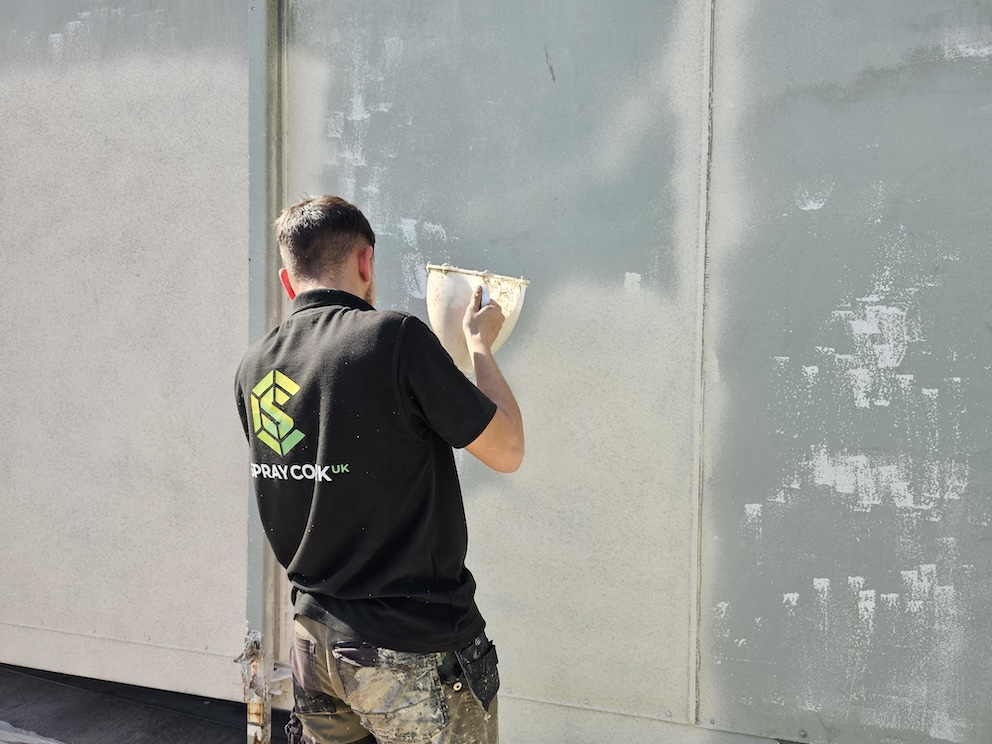
Spray cork is not like painting a wall or applying a basic exterior coating. It requires specialist equipment, correct surface preparation, and consistent application thickness to perform properly.
If the substrate is not sound or the preparation is rushed, you can end up with a finish that does not look right, or does not achieve the long-term durability you expect. For contractors, this is why proper training matters. If you are interested in becoming an approved installer, see Spray Cork Training.
One of the most common concerns is price. Compared with exterior masonry paint, spray cork can cost more initially because it is designed as a performance coating, not just a decorative finish.
Many homeowners find it becomes more cost effective over time because it is built to last and needs less maintenance than repainting cycles. If you want a like-for-like comparison against render systems, you may find this helpful: Spray Cork vs Traditional Render: How Long Does It Last?.
Spray cork can help protect surfaces and reduce the chance of hairline cracking showing through, but it is not a solution for structural problems.
If you have major movement cracks, unstable render, failing substrates, or underlying building defects, those issues should be assessed and resolved before any coating system is applied. Spray cork performs best when applied to a stable, well-prepared surface.
Preparation can be a hidden cost and a hidden benefit. Loose render, failing paint systems, contamination, and poorly bonded areas need to be dealt with first. That can add time compared with quick cosmetic options.
The upside is that good preparation is one of the main reasons spray cork systems achieve strong longevity when installed correctly.
Because spray cork is designed as a long-lasting exterior finish, changing the look later is not as simple as a quick repaint. While a wide range of colours are available, it is worth making sure you are happy with the choice before application.
Spray cork can be suitable for many surfaces and property types, but there are situations where an alternative approach may be recommended, such as:
If you are unsure, a good starting point is speaking with a specialist or finding an approved installer. You can use Spray Cork Contractors to find support.
Many of the perceived drawbacks come from comparing spray cork to exterior paint, rather than to full render systems and performance coatings. If the goal is long-term weather protection, breathability, and a finish that is built for UK conditions, spray cork is often considered in a different category.
If you are weighing up different exterior finishes, this article is a useful companion piece: What is the Best Render for UK Properties?.
For many UK homes, spray cork is a strong option when you want a durable, breathable, low-maintenance exterior finish that supports thermal performance and helps resist the effects of driving rain.
The key is ensuring correct preparation, using the right system for the substrate, and having the work carried out by trained professionals.
If you want to learn more about the product, request information, or discuss training and supply options, the quickest route is:
