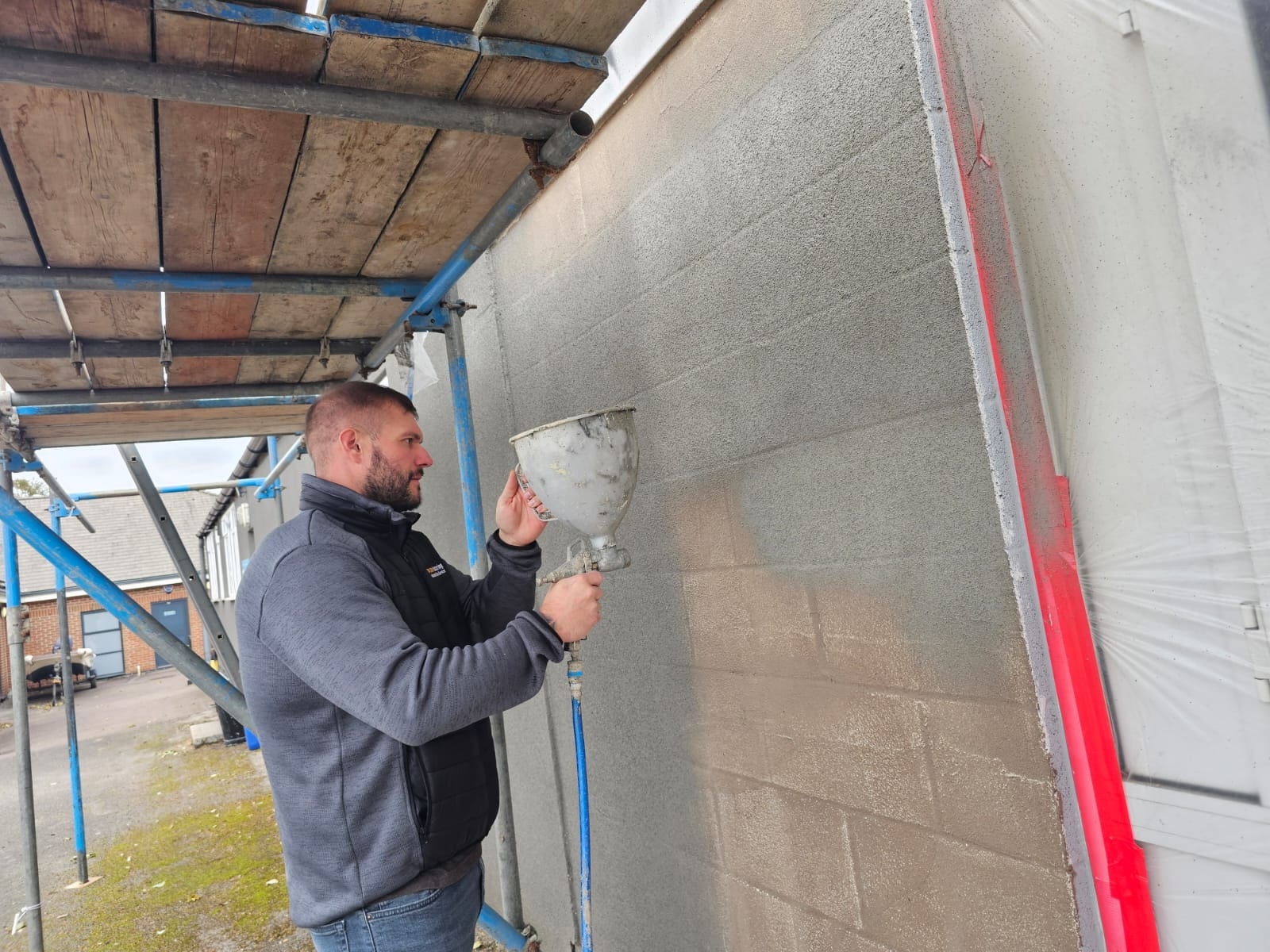
This guide explores how spray cork performs over time, how it compares with traditional exterior finishes, and when it represents good value for UK properties. If you are new to the product, you may wish to begin with The Complete Guide to Spray Cork Insulation in the UK, which explains how the system works in more detail.
Before deciding whether spray cork is worth it, it is important to understand its purpose. Spray cork is not simply a decorative coating. It is designed as a protective exterior system that combines flexibility, breathability and weather resistance in a single application.
The coating is made using natural cork granules combined with advanced resins to create a textured finish that bonds to exterior surfaces. Once applied, it forms a durable layer that helps protect walls from driving rain, thermal stress and surface cracking.
Unlike paint, which primarily improves appearance, spray cork is intended to improve long-term building performance while maintaining an attractive finish.
One of the first things property owners notice is that spray cork costs more upfront than masonry paint. This comparison, however, can be misleading because the two systems serve different purposes.
Exterior paint is typically a short to medium-term cosmetic solution. Spray cork is closer in function to a render or protective wall coating designed to last significantly longer.
Costs vary depending on property size, access requirements and preparation work, but the investment includes:
For a balanced perspective, you can also read What Are the Disadvantages of Spray Cork?, which looks honestly at potential limitations.
When assessing value, lifecycle cost matters more than initial price. Many UK homes require repainting every five to ten years depending on exposure to weather and surface condition.
Each repaint involves labour, materials and disruption. Over time, these repeated costs can exceed the investment in a longer-lasting coating system.
Spray cork is designed to reduce this cycle by providing a finish that maintains performance and appearance for decades when properly installed.
The UK climate presents unique challenges for external walls. Driving rain, freeze-thaw cycles and temperature fluctuations place continuous stress on building surfaces.
Traditional rigid coatings can crack as buildings naturally expand and contract. Spray cork’s flexibility allows it to move slightly with the substrate, reducing visible cracking and helping maintain protection over time.
Its breathable structure also allows trapped moisture vapour to escape, which can help reduce condensation-related issues on suitable properties.
Spray cork should not be viewed as a replacement for structural insulation such as cavity wall or external wall insulation systems. However, it can contribute to improved thermal comfort by reducing rapid heat transfer through external surfaces.
This can help stabilise internal temperatures, particularly in properties exposed to wind or heavy rain.
Many homeowners notice improved comfort levels rather than dramatic reductions in heating bills, which is an important expectation to understand.
Another factor influencing value is maintenance. Painted surfaces can fade, peel or require frequent cleaning. Spray cork coatings are designed to be low maintenance once installed.
Typical upkeep involves occasional cleaning rather than full reapplication. The textured finish also helps disguise minor surface imperfections that may become visible with smooth paint systems.
To understand longevity in more detail, see How Long Does Spray Cork Last?.
Spray cork tends to provide the strongest value in specific situations:
In these cases, durability and reduced maintenance often outweigh the higher initial investment.
Spray cork may not always be the most suitable option. Properties with structural defects or severely failing substrates may require repairs before any coating system is applied.
It is also not intended to replace full insulation upgrades where significant energy efficiency improvements are required.
A professional assessment helps determine whether spray cork is appropriate for a particular building.
Many property owners compare spray cork directly with render systems rather than paint. Traditional render provides a solid exterior finish but can be prone to cracking over time.
Spray cork offers a thinner, flexible alternative designed to protect surfaces while reducing stress caused by temperature changes.
You can explore this comparison further in Spray Cork vs Traditional Render.
For many UK properties, spray cork represents a long-term approach to exterior protection rather than a short-term cosmetic improvement. Its value comes from durability, reduced maintenance and improved performance in challenging weather conditions.
The key factors influencing success are proper preparation, professional installation and realistic expectations about its role as a protective coating.
If you would like advice on suitability, training opportunities or supply information, you can contact Spray Cork UK or learn more about becoming an installer through Spray Cork Training.
