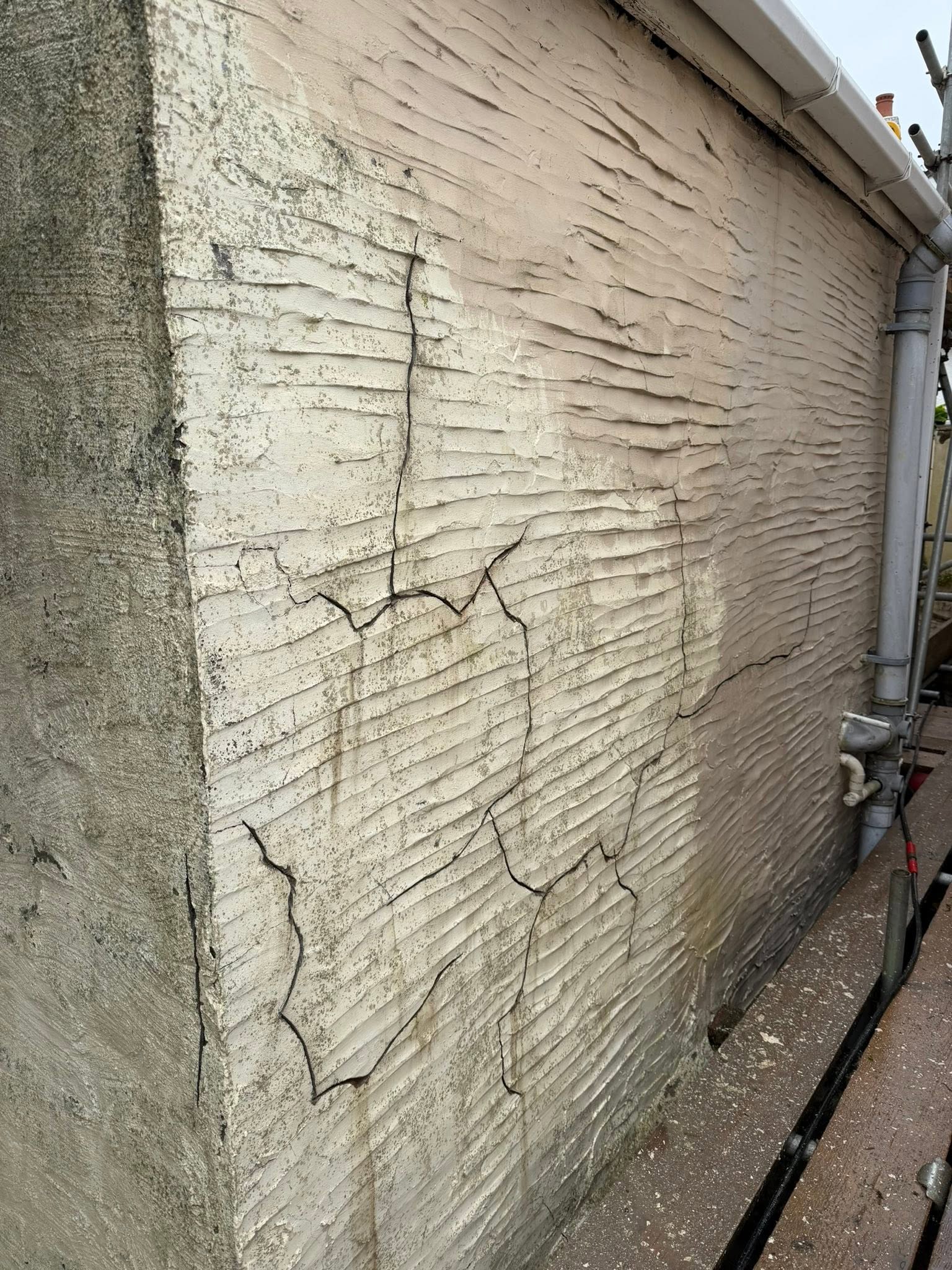
Cracked render is easy to overlook, especially if the damage looks minor from a distance.
A few hairline cracks may not seem urgent, but render plays an important role in protecting the outside of your home. When it starts to fail, water can find its way behind the surface, leading to damp patches, blown render, staining and further damage over time.
If your render is cracked, tired or pulling away from the wall, it is worth understanding what may be happening before the problem gets worse.
Quick Answer: Cracked render should not be ignored because it can allow rainwater to get behind the surface and into the wall. Over time, this can lead to penetrating damp, damaged masonry, blown render, internal staining and higher repair costs. The cause of the cracking should be checked before repainting or applying another finish.
Render can crack for several reasons.
Sometimes the cracks are linked to normal movement in the building. In other cases, they may be caused by poor application, unsuitable materials, impact damage, weather exposure, trapped moisture or movement between different building materials.
Older homes can be more vulnerable because the structure may move slightly over time, especially where previous repairs have been carried out using harder modern materials.
Cracks can also appear where render has become brittle, lost adhesion or started to separate from the wall behind.
Small cracks may not look serious, but they can allow rainwater to get behind the render.
Once water enters through a crack, it can travel behind the surface and become trapped. During colder months, repeated wetting, drying and freezing can make the crack worse.
Over time, this can lead to larger cracks, hollow areas, staining, damp patches and sections of render breaking away from the wall.
The longer the issue is left, the more difficult and expensive it may be to put right.
Yes, cracked render can contribute to damp problems if it allows moisture to enter the wall.
This is commonly linked to penetrating damp, where rainwater gets through the external surface of the building. RICS explains that water can penetrate through cracks in masonry and other external defects such as damaged roof coverings. You can read more in their guide on how to deal with damp.
If water is entering through cracked render, you may notice internal damp patches, peeling paint, staining, salts, mould growth or a musty smell.
However, damp should always be diagnosed carefully. Cracked render may be one cause, but leaks, condensation, gutters, pointing, roof defects and high ground levels can also contribute.
Not every crack means the render needs to be fully removed, but it should still be checked.
Hairline cracks may be surface-level, especially if they are fine, stable and not allowing water into the wall. Larger cracks, stepped cracking, hollow-sounding render or areas where the render is pulling away can be more concerning.
Signs that render damage may need attention include:
If you are unsure, it is better to get the wall assessed before applying paint or another coating.
Painting over cracked render may improve the appearance for a short time, but it may not solve the underlying problem.
If the render is already loose, brittle or allowing water behind the surface, paint will not repair the failure. In some cases, it may hide the issue until the damage becomes more obvious later.
Before decorating, the cause of the cracking should be understood. The surface may need cleaning, repairs, stabilising or more detailed preparation before a new finish is applied.
This is especially important if you want the finished exterior to last.
Render may need repairing if the cracks are localised and the surrounding surface is still sound.
This could involve removing loose material, repairing cracks, making good damaged areas and preparing the surface correctly before applying a suitable finish.
However, if large areas are blown, hollow or failing, patch repairs may not be enough. The wall may need more significant preparation or a different approach.
The right solution depends on the condition of the existing render and the reason it has failed.
When repairing or upgrading an exterior wall finish, breathability is important, especially on older homes and solid wall properties.
If the wall needs to release moisture, using an impermeable coating can create problems by trapping moisture behind the surface.
A breathable exterior finish allows moisture vapour to pass through while still helping to protect the wall from weather exposure.
This is one of the reasons homeowners are looking beyond traditional render and exterior paint when modernising older properties.
Spray cork can be an effective option for improving tired exterior walls when the existing surface is suitable and properly prepared.
Its flexible nature can help accommodate small movements better than harder, more brittle finishes. It also creates a breathable coating that can help protect the wall while allowing moisture vapour to escape.
For homes with old render, pebbledash or tired masonry, ReveCork spray cork can provide a modern finish without always needing a full removal of the existing surface.
However, the wall must be assessed first. Loose, blown or badly damaged render should not simply be covered over without proper preparation.
In many cases, spray cork can be applied over existing render if the surface is sound, stable and correctly prepared.
This can make it a useful option for homeowners who want to modernise the outside of their property without the disruption of fully removing the existing render.
Preparation is key. The surface may need cleaning, repairs, stabilising and priming before spray cork is applied.
If the existing render is failing, it may need to be repaired or removed in affected areas first. A trained applicator will be able to advise on the correct approach.
Exterior wall coatings only perform properly when they are applied to the right surface in the right way.
A trained spray cork applicator will understand how to assess the substrate, prepare the wall, repair defects and apply the product to the correct standard.
This matters because cracked or tired render is rarely just a cosmetic issue. The condition of the surface underneath will influence how successful the new finish is.
If you are looking for a trusted installer, Spray Cork UK can help you find experienced spray cork contractors across the UK.
Cracked render should not be ignored. Even small cracks can allow rainwater behind the surface, leading to damp problems, staining, blown render and further damage over time.
Before painting or covering cracked render, it is important to understand why the cracking has happened and whether the existing surface is still sound.
Spray cork can be a flexible, breathable and modern option for upgrading tired exterior walls when the surface is suitable and properly prepared.
If your home has cracked render, pebbledash or tired exterior walls, contact Spray Cork UK today to discuss whether spray cork could be the right solution.
