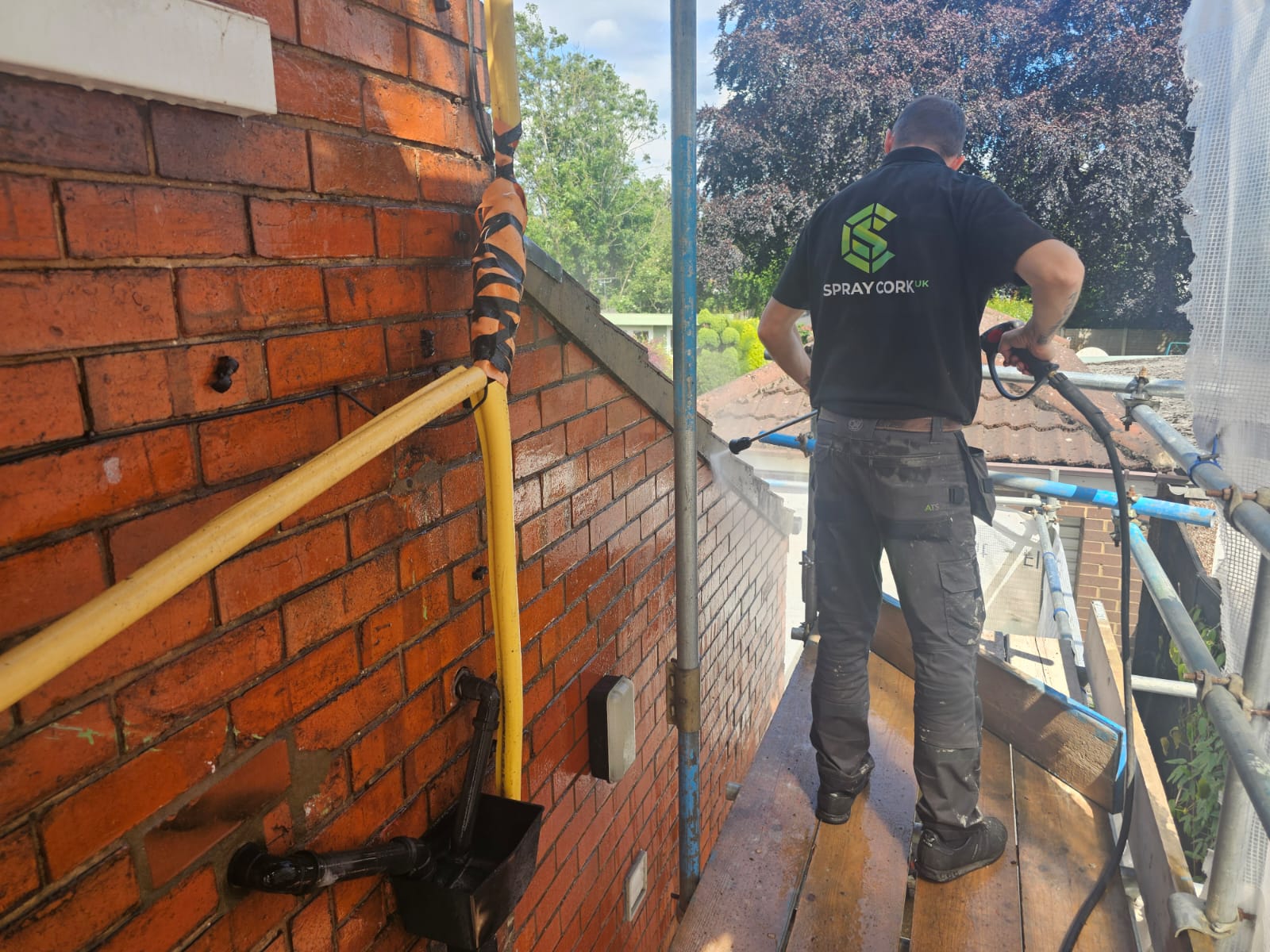
You can have a warm, dry spell in February and a week of heavy rain in July. For contractors trying to plan exterior work, and homeowners wondering when to book it, this unpredictability can make things difficult.
So, can spray cork be applied all year round?
With ReveCork, the answer is yes, provided the weather and surface conditions are suitable. Its wide application temperature range gives trained installers more opportunities to work throughout the year, including during the cooler months.
That does not mean it should be applied in pouring rain, during frost or onto a soaking wet wall. What it does mean is that a ReveCork project does not necessarily need to be restricted to the height of summer.
Many exterior coatings have a relatively narrow application window. If the temperature drops too low, the coating may struggle to dry or bond correctly. If it is too hot, it can dry too quickly and make it harder to achieve a consistent finish.
This can cause problems when working in the UK. A project scheduled for early spring might be delayed by a cold spell, while a job booked for August could still be interrupted by rain, strong wind or unusually hot walls.
ReveCork has been developed to work across a much broader range of temperatures. The manufacturer’s published technical information lists an application temperature range of 1°C to 50°C.
This gives contractors greater flexibility when planning work and reduces the need to confine exterior spray cork projects to a small part of the year.
Year-round application means there can be suitable opportunities to apply ReveCork during every season. It does not mean every day will be suitable.
Before beginning work, the applicator will still need to consider:
A trained applicator will look at the complete picture rather than relying on the temperature shown in a weather app.
For example, a wall may remain cold and damp after overnight rain even if the air temperature has started to rise. On the other hand, a dark south-facing wall can become much hotter than the surrounding air during summer.
Yes, ReveCork can be applied during suitable winter weather windows.
The surface must be frost-free, dry and correctly prepared. The forecast must also provide enough time for the coating to begin drying without being affected by rain or freezing conditions.
An experienced installer may adapt the schedule to make the most of the conditions. This might involve starting with a sheltered elevation, working during the warmest part of the day or postponing an exposed wall if the forecast changes.
The important thing is not simply getting the product onto the property. Each layer must be given the right conditions to bond and cure properly.
Winter is also a useful time to spot problems with the building. Leaking gutters, defective flashing, loose render and persistent water ingress can become more obvious during wet weather. These issues should be repaired before ReveCork is applied.
ReveCork is a breathable, weather-resistant coating, but it should not be applied over an unsuitable wet surface.
The wall needs to be dry enough for the specified primer and coating to achieve a reliable bond. Applying a coating over surface water or immediately before heavy rain could affect the quality of the finished system.
It is also important to identify why a wall is damp. If water is entering through a leaking gutter, damaged roof detail or failed pointing, that problem needs to be corrected first.
Once properly installed and cured, ReveCork helps protect exterior walls against the elements while allowing water vapour to pass through the coating. This balance between weather resistance and breathability is particularly useful for older UK properties.
Summer may appear to be the obvious time for exterior work, but hot weather can bring its own challenges.
Strong sunlight can make the surface of a wall considerably hotter than the surrounding air. This may cause the coating to dry more quickly on one elevation than another. Wind can also accelerate surface drying and increase the risk of overspray.
A trained installer may work around the property to avoid the strongest direct sunlight and keep a close eye on surface temperatures as the day progresses.
The wide application range gives ReveCork installers more flexibility, but professional judgement is still essential in every season.
Drying times vary depending on the temperature, humidity, airflow, surface and thickness of each layer.
The manufacturer’s published information gives an indicative touch-dry time of approximately three hours at temperatures between 18°C and 20°C. Total drying on absorbent surfaces is listed as approximately 72 to 96 hours.
These figures are a guide rather than a guarantee for every project. Cooler or more humid conditions may extend the drying time, which is why the installer needs to consider the forecast beyond the day of application.
A wide application window does not remove the need for proper preparation. No exterior coating will perform at its best if it is applied over loose, dirty or unstable material.
Before applying ReveCork, preparation may include:
ReveCork’s flexibility can help it accommodate minor movement, but it cannot repair structural problems. Significant or recurring cracks should always be investigated before coating work begins.
A wider application window gives homeowners more choice over when to schedule their project.
You may not need to wait until the middle of summer, when exterior contractors are often at their busiest. Work may be possible during a dry period in spring, autumn or winter, depending on the property and forecast.
This flexibility can also help reduce lengthy delays and the amount of time scaffolding needs to remain in place. Every project is different, but the ability to work across more of the year makes planning considerably easier.
For contractors, ReveCork’s wider application window can make it easier to maintain a steady workload beyond the traditional rendering season.
Being able to make use of suitable days during the cooler months provides more flexibility when planning jobs. It can also help reduce the disruption caused when temperatures fall outside the limits of a more restrictive coating.
However, the product is only one part of the finished result. Preparation, primer selection, equipment set-up, masking, application and curing all matter.
Our spray cork training courses teach contractors how to apply ReveCork correctly and assess the real conditions found on UK properties.
ReveCork’s published application temperature range starts at 1°C. However, the surface must be dry and frost-free, with suitable conditions available during application and curing.
No. Year-round application does not mean application during active rain. The surface must be suitable, and freshly applied material needs to be protected from unsuitable weather while it cures.
It can. Lower temperatures and higher humidity may increase drying times. A trained applicator will consider the conditions and allow sufficient time between different stages of the installation.
Summer often provides longer working days, but hot walls, direct sunlight, wind and showers can still affect an exterior project. A mild, dry day during another season may provide equally good working conditions.
ReveCork is suitable for a wide variety of surfaces, but the existing wall or coating needs to be inspected first. Loose render, active leaks, structural cracks and other defects must be addressed before application.
ReveCork’s wide application window makes it particularly well suited to the changing British weather. It gives homeowners more choice when planning exterior improvements and helps trained contractors work beyond the traditional summer season.
The key is choosing the right weather window, preparing the surface properly and allowing the coating enough time to cure.
If you are considering ReveCork for your home, we can connect you with a trained spray cork contractor in your area.
If you work in the trade, explore our training courses and ReveCork product supply to find out how you can offer spray cork to your customers.
Contact Spray Cork UK to discuss your property, project or training requirements.
