preparing your home for winter the role of spray cork insulation

Preparing Your Home for Winter: The Role of Spray Cork Insulation

Cold has a way of creeping in long before the clocks change. First, it’s a chill in the hallway, then the spare room turns into an icebox, and the north gable starts to sweat. Turn the thermostat up and your bills skyrocket. Turn it down and the complaints start. Basically, a classic UK winter.

You can throw more heat at a leaky envelope. Or you can stop the leaks. That’s where spray cork earns its keep.

Here at Spray Cork UK we’re the sole supplier of ReveCork in Britain. We supply the product, we train the contractors, and we help homeowners find crews who know what they’re doing. Here’s how spray cork helps you win winter without tearing the house apart or racking up a big pre-Christmas bill.

Why winter beats up British homes

There are two main bullies here: cold and wet. Throw in the freeze–thaw cycle that can turn hairlines into full blown cracks and winter is tough on British homes. Driving rain works its way into weak spots and you can bet old brick and stone hold moisture. Not to mention wind on the Fens, salt air blowing in from the coast and traffic grime in the city. In a nutshell: walls take a pasting.

What spray cork actually is (and why it behaves differently)

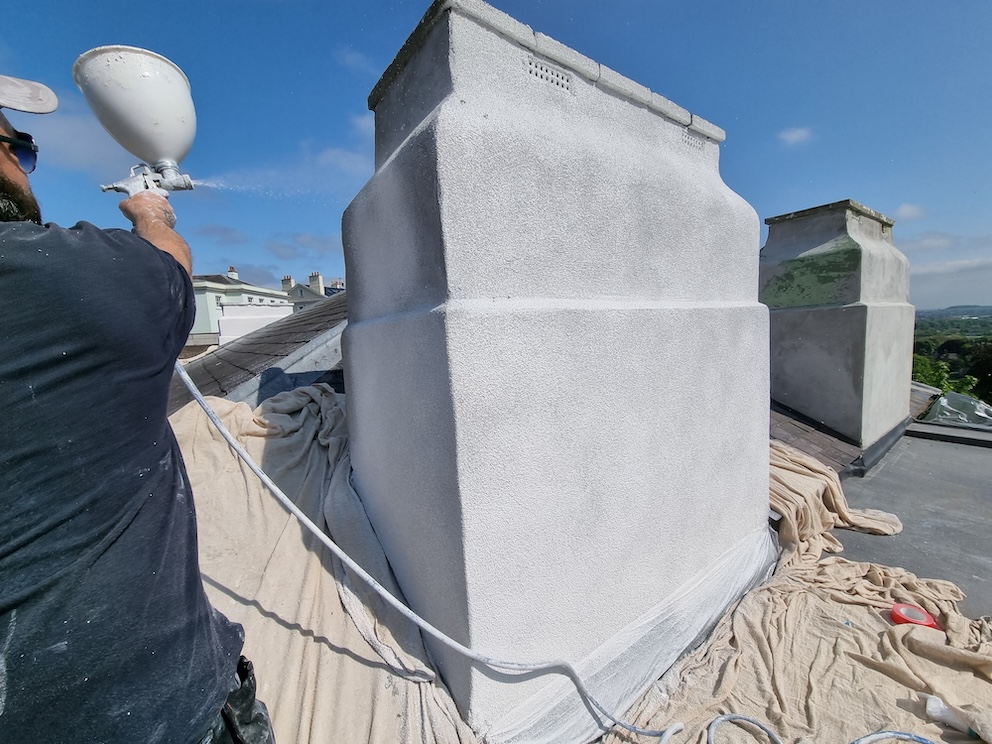
ReveCork is natural cork granules in a high-performance binder, sprayed on with a speciality hopper/compressor. It lands as a thin, flexible skin that’s breathable and tough enough to withstand all the stressors mentioned above.

Here’s where it excels:

  •  Thermal performance: millions of air cells slow heat transfer and help rooms hold warmth. In summer, cool air is trapped inside so your rooms don’t bake.
  • Breathable: water vapour can leave the wall through the breathable membrane and of course, liquid water stays out. Damp eases without trapping moisture.
  • Flexible: tiny movements in the building? Spray cork flexes which means less cracking and less water ingress.
  • Weather-hard: rain, frost, UV... Spray cork shrugs off the lot better than a rigid cement topcoat.
  • Versatile: It goes on brick, old render, block, stone, timber cladding, metal trims, and more. It’ll even tame pebble dash that’s seen better decades (provided the dash is sound).
  •  Sound insulating: as an added bonus, spray cork knocks down mid-to-high frequency noise (think traffic, voices and rain on cladding).

Where spray cork makes the biggest difference

Here’s where ReveCork excels in the British housing stock:

Solid-wall terraces (often from the Victorian/Edwardian eras)

Spray cork can be an excellent solution for older properties with no cavity to fill.

Stone cottages

Breathability matters when it comes to stone walls and spray cork meets the brief. It’s a great alternative to cement skins which can often cause damp.

1970s–90s estates

Spray cork can breathe new life into tired monocouche, while simultaneously bridging cold gaps around bays and lintels.

Modern extensions

Junctions between old and new fabric are vulnerable to movement, cracks and cold ingress. Spray cork addresses these issues with a flexible, breathable, cold-repelling membrane.

Coastal and exposed plots

Salt spray, sideways rain, high UV, strong winds… ReveCork doesn’t blink.

How jobs get planned when the forecast turns grim

“Will it fix X?” Straight answers

Rising damp

Unfortunately no coating fixes that. Treat the source, then install a breathable system like spray cork to keep new growth at bay.

Leaky gutters/flashings

Fix the leak first. ReveCork won’t outsmart a serious leak.

Crumbling render

It needs to be sound before spray cork can be applied. We’ll remove what’s loose, repair patches and then build a proper base.

Insulation targets

Spray cork is a high-performance thermal layer, not a 100 mm EWI board. Many clients layer measures like loft insulation, ReveCork outside and interior draught-proofing to create a combo moves the needle.

FAQ

Questions? We have answers.

How long does it last?

Decades when applied to a sound substrate. It doesn’t embrittle like cement and is more than capable of standing up to harsh winter weather in the UK.

Colour range

30+ muted, mineral-leaning shades that suit real British streets. Pro tip: Go for something darker if you want to avoid showing every winter streak.

Maintenance

Surprisingly low. Keep gutters clear, trim the ivy, rinse the north face now and then if you like things spotless.

For contractors: why add ReveCork to your kit

  • Differentiate from your competitors: spray cork isn’t just “another render”. It promises thermal help, acoustic lift, breathability and flexibility.
  • Versatility: whether your project is a retrofit, new build, domestic or light commercial, spray cork will deliver. It also works for interiors.
  •       Speed: the sprayed finish goes on fast, and you’ll get clean edges, neat detailing and happy clients.
  •       Support: we train your crew in the works: prep, build-ups, weather windows and colour control. We’re on the phone when the British weather misbehaves and you need hands-on support.
  •       We only sell ReveCork: We know it inside out. We’ll get you and your team there too.

For homeowners: what you’ll notice first

  • Rooms hold heat. The 7 pm slump vanishes.
  • That outside wall stops feeling “cold to the touch”.
  • Condensation backs off. Less wiping, less mould growth.
  • The house looks smarter without looking plastic.

Best of all? You don’t have to live on a building site to get there!

Good partner measures (for best winter results)

Unlock the best possible results and combine your spray cork investment with a few complimentary upgrades:

  •  Loft insulation to current depths.
  •  TRVs and balancing so radiators do their fair share.
  •  Decent ventilation (trickle vents or MEV) to keep humidity in check.
  •  Fix the obvious: gutters, pointing, sills and vents. Cork can’t perform at its best if water’s pouring in elsewhere.

Costs, value, and the quiet savings

No wild promises here. You won’t halve your energy bill overnight. But stopping external walls from gulping heat makes a clear, felt difference. Thermostat set points usually drop, boiler cycles calm down and comfort rises. And yes, your bills will creep down. That’s value you feel every evening between November and March.

How to get moving before the frost bites

  1.     Send us a couple of photos and an address. We’ll sense-check exposure and substrate.
  2.     We’ll pair you with a trained contractor near you.
  3.     They’ll survey, quote and schedule to suit the weather.

Ready to make winter easier? Get in touch today and let’s chat about your project.

Share this post
View More Articles
linkedin facebook pinterest youtube rss twitter instagram facebook-blank rss-blank linkedin-blank pinterest youtube twitter instagram